You have 0 items in your cart





£26.95
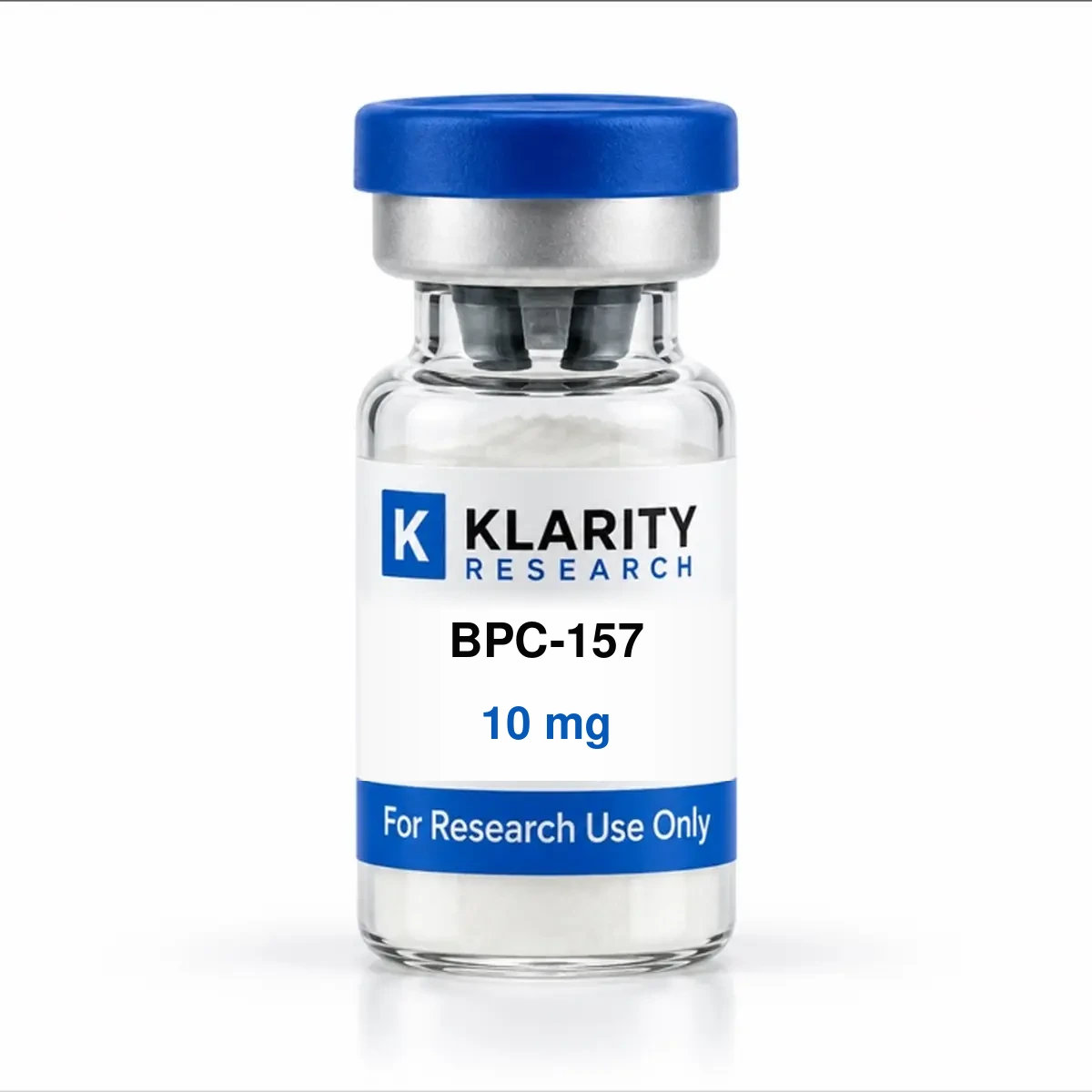
BPC-157 is a synthetic peptide fragment supplied as freeze-dried (lyophilised) research material for laboratory and preclinical research only. It is not a medicine, supplement, or approved therapeutic product.
Typically formulated as a single 10 mg research vial:
10 mg BPC-157
Total = 10 mg peptide content
Lyophilised (freeze-dried) powder
Stored in a sealed laboratory-grade vial
Designed for reconstitution in controlled research environments only
BPC-157 is studied in experimental pharmacology, peptide biology, and preclinical research, with particular interest in:
Tissue-repair and regenerative signalling
Gastrointestinal biology
Angiogenic and vascular signalling
Cellular protection mechanisms
Inflammatory-response pathways
Wound-healing models
BPC-157 is a synthetic peptide consisting of 15 amino acids and is derived from a sequence associated with gastric juice.
Experimental research has investigated its interactions with several biological signalling pathways, including mechanisms involving nitric oxide signalling, vascular responses, inflammatory pathways, and tissue-repair processes.
Preclinical studies have explored its effects in various animal and cellular models, including models relating to gastrointestinal injury, soft-tissue damage, and wound healing. The mechanisms underlying these observations remain an area of ongoing research.
Researchers commonly use BPC-157 to investigate:
Tissue-repair signalling mechanisms
Wound-healing processes
Gastrointestinal tissue models
Angiogenesis and vascular signalling
Inflammatory-response modulation
Cellular survival and protection pathways
Peptide-mediated regenerative mechanisms
Lyophilised form can improve stability compared with an aqueous peptide preparation.
Research material should be stored according to the manufacturer’s or laboratory’s validated storage specifications.
After reconstitution, stability can vary depending on concentration, solvent, temperature, container, and handling conditions.
Reconstituted material should therefore be handled according to an appropriate laboratory protocol and should not be assumed to remain stable outside validated conditions.
BPC-157 is an experimental peptide and is not an approved general-purpose medicine or dietary supplement.
Research-grade BPC-157 supplied as lyophilised material is not equivalent to a licensed medicinal formulation.
Supplied strictly as research material / laboratory reagent and intended for qualified research environments only. It is not intended for human or veterinary
BPC-157 is a synthetic peptide fragment supplied as freeze-dried (lyophilised) research material for laboratory and preclinical research only. It is not a medicine, supplement, or approved therapeutic product.
Typically formulated as a single 10 mg research vial:
10 mg BPC-157
Total = 10 mg peptide content
Lyophilised (freeze-dried) powder
Stored in a sealed laboratory-grade vial
Designed for reconstitution in controlled research environments only
BPC-157 is studied in experimental pharmacology, peptide biology, and preclinical research, with particular interest in:
Tissue-repair and regenerative signalling
Gastrointestinal biology
Angiogenic and vascular signalling
Cellular protection mechanisms
Inflammatory-response pathways
Wound-healing models
BPC-157 is a synthetic peptide consisting of 15 amino acids and is derived from a sequence associated with gastric juice.
Experimental research has investigated its interactions with several biological signalling pathways, including mechanisms involving nitric oxide signalling, vascular responses, inflammatory pathways, and tissue-repair processes.
Preclinical studies have explored its effects in various animal and cellular models, including models relating to gastrointestinal injury, soft-tissue damage, and wound healing. The mechanisms underlying these observations remain an area of ongoing research.
Researchers commonly use BPC-157 to investigate:
Tissue-repair signalling mechanisms
Wound-healing processes
Gastrointestinal tissue models
Angiogenesis and vascular signalling
Inflammatory-response modulation
Cellular survival and protection pathways
Peptide-mediated regenerative mechanisms
Lyophilised form can improve stability compared with an aqueous peptide preparation.
Research material should be stored according to the manufacturer’s or laboratory’s validated storage specifications.
After reconstitution, stability can vary depending on concentration, solvent, temperature, container, and handling conditions.
Reconstituted material should therefore be handled according to an appropriate laboratory protocol and should not be assumed to remain stable outside validated conditions.
BPC-157 is an experimental peptide and is not an approved general-purpose medicine or dietary supplement.
Research-grade BPC-157 supplied as lyophilised material is not equivalent to a licensed medicinal formulation.
Supplied strictly as research material / laboratory reagent and intended for qualified research environments only. It is not intended for human or veterinary
| 10mg | Single |
|---|
Jan Hall –
Love everything about here and the high quality products that are provided. Nothing was to much bother and the advice completely on point, completely recommend Klarity Research